A casino payment can create a cost outside the playing balance when a credit card issuer applies interest and a cash-like transaction fee. At Interac Casinos, the payment method matters: an ordinary bank e-Transfer is different from borrowing through a card. Before authorizing either, identify where the money comes from and which agreement controls the cost. A deposit that looks unchanged inside the casino can still leave a larger amount owing elsewhere.
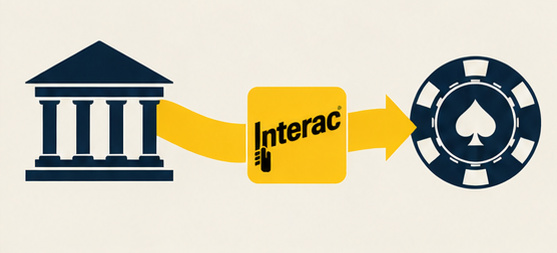
Identify the funding product first
When discussing a payment at https://muckrack.com/allen-dent/bio, keep the deposit, issuer fee and interest as separate amounts so the actual cost remains clear.
Online casinos that accept Interac may also support cards or other methods. That does not make all those payments Interac transactions. A card deposit should be assessed under the card agreement, while a bank transfer uses the relevant banking arrangement.
Separate borrowing from an account transfer
A conventional credit card provides borrowing capacity. An e-Transfer normally moves funds from the selected sending account, subject to its conditions. If that account uses overdraft or another borrowing facility, its costs need separate attention too. The payment service name alone does not establish that funding is free of debt.
Keep prepaid funds distinct
A prepaid card uses funded account money rather than ordinary credit card borrowing. KOHO’s prepaid Mastercard is therefore not the same product as a conventional credit card. Optional account credit features, where used, have their own conditions and should not be assumed to be part of a simple prepaid payment.
This table identifies the question each route needs.
| Funding route | Cost question |
|---|---|
| Credit card deposit | Is it treated as a purchase or cash-like transaction? |
| Prepaid card payment | Which account fees and available funds apply? |
| Bank e-Transfer | What service charge or borrowing condition applies? |
| Payment through another account | Does an earlier loading stage add cost? |
Understand cash-like costs at Interac Casinos
A card issuer may classify gambling activity as a cash advance or cash-like transaction. The Financial Consumer Agency of Canada explains that such treatment can involve immediate interest and a fee, without the ordinary purchase grace period. The exact classification belongs to your card agreement.
Do not rely on paying the next bill in full
A person accustomed to avoiding purchase interest by paying the statement may expect the same result here. Cash-like treatment can work differently. Ask the issuer about the transaction category before assuming that the usual purchase payment habit removes all interest.
Interac Casinos cannot change the issuer’s classification by calling a deposit free. The operator’s statement may describe only its own charges. Keep the casino cost and card cost on separate lines.
Give fixed fees their proper weight
A fixed charge can take a large share of a small payment. A percentage charge can also have a minimum. Read the fee calculation rather than assuming a small deposit creates a proportionately small external cost.
Do not deposit more to dilute the fee
Low deposit Interac casinos can accept a small starting amount while the selected funding product remains expensive. Increasing the deposit to make a fee look smaller as a percentage puts more money at risk. A better comparison holds the intended amount steady and asks whether the route is suitable at all.
The cost calculation should include these inputs.
- The amount actually borrowed or debited.
- The transaction classification.
- The applicable fee, including any minimum.
- The interest rate and the date interest begins.
- The issuer’s repayment and interest calculation rules.
- Any currency conversion or separate account charge.
See how time adds to the cost
Interest depends partly on how long the relevant balance remains outstanding. A payment that takes longer to repay can cost more even when the original casino deposit never changes. A win or withdrawal does not automatically settle the card debt.
Use arithmetic only as an illustration
The following figures are invented. They assume a simple daily calculation on a constant $100 balance at an annual rate of 24% for thirty days, with a separate $3 fee. They do not describe any actual issuer’s offer or full calculation method.
| Illustrative component | Calculation | Amount |
|---|---|---|
| Deposit principal | Original hypothetical borrowing | $100 |
| Simple interest | $100 × 0.24 × 30 ÷ 365 | About $1.97 |
| Fixed fee | Invented separate charge | $3 |
| Added cost | Illustrative interest plus fee | About $4.97 |
The example shows why the casino credit can remain $100 while the external amount owing is larger. Actual costs can differ because issuers apply their own terms, payment allocation and calculations.
Interac casino withdrawals are a separate transaction. Waiting for a payout does not suspend card interest under the issuer’s agreement. A payout can also require review or use another receiving method, so it should not be treated as a guaranteed way to clear borrowing by a particular date.
Choose a clearer funding decision at Interac Casinos
The useful question is not which card permits the largest deposit. It is whether the complete route fits the amount you intended without creating unwanted borrowing costs. Gambling should not depend on winning enough to repay a payment product.
Use a calm response if a charge has already appeared.
- Match the card entry to the original deposit.
- Ask the issuer which category, fee and interest rule applied.
- Keep any casino charge or conversion separate.
- Resolve an unexplained or duplicate entry through verified support.
- Stop further casino funding while the cost remains unclear.
Interac casino bonuses do not cancel interest. Restricted credit and wagering opportunities are not cash already returned to the card. Compare a plain payment first, then assess a reward independently.
The best Interac casinos in Canada explain their own payment conditions clearly. Interac e-Transfer casinos should not blur bank transfers with card borrowing. Instant withdrawal Interac casinos still have account checks and cannot guarantee repayment timing for a separate card balance.
Local eligibility also comes first. An international licence does not authorize an operator throughout Canada. Interac casino deposits should only be considered after the account and provincial conditions are suitable, regardless of the funding method’s apparent convenience.
Separate gambling loss from payment cost in the final calculation. If the hypothetical $100 deposit is lost, the original borrowing is still owed alongside applicable charges. If some money remains at the casino, that balance is not automatically a card repayment. It must first be eligible for withdrawal, received and applied through the issuer’s normal payment process. Keeping those events separate prevents a displayed win from being mistaken for settled debt.
A pending authorization needs a different explanation from a posted charge attracting interest. Ask the issuer what has actually been collected and what remains temporary. Do not assume a reduced available credit figure alone establishes the final fee or interest amount. Match the posted transaction and any separate charge before calculating the cost.
Interac Casinos can explain whether the deposit was credited, but the issuer controls its own repayment and interest rules. If several balance categories exist on the card, ask how payments are allocated rather than guessing that one transfer clears the particular casino charge. That account explanation belongs outside the gambling session and does not require another deposit.
Conclusion
Card deposits to Interac Casinos can cost more when cash-like fees and immediate interest apply. Identify the actual funding product, read the issuer’s classification and keep external costs separate from casino credit. A small deposit or large bonus does not remove borrowing costs. Make the payment decision without relying on a future win or payout to repay it.